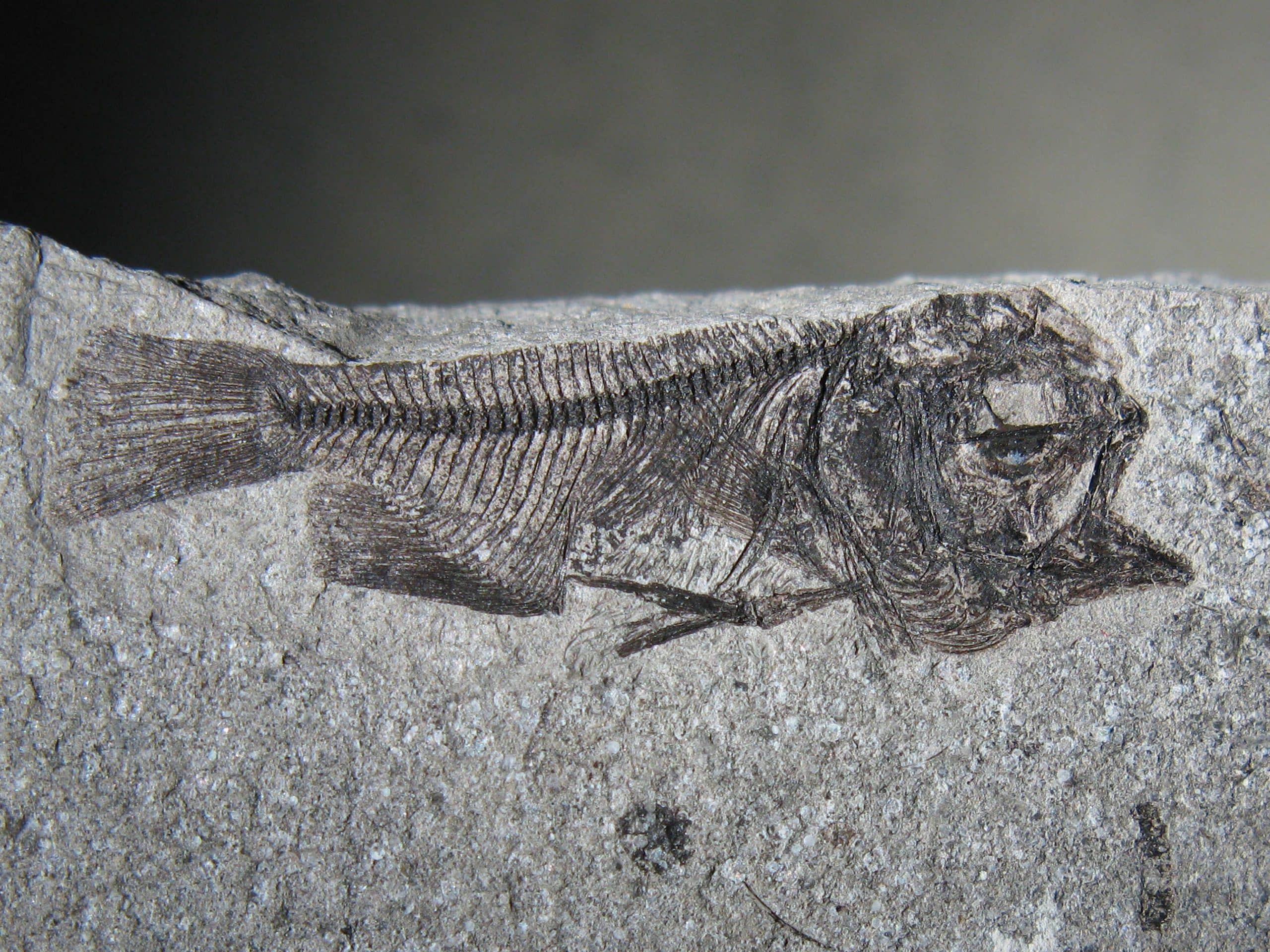
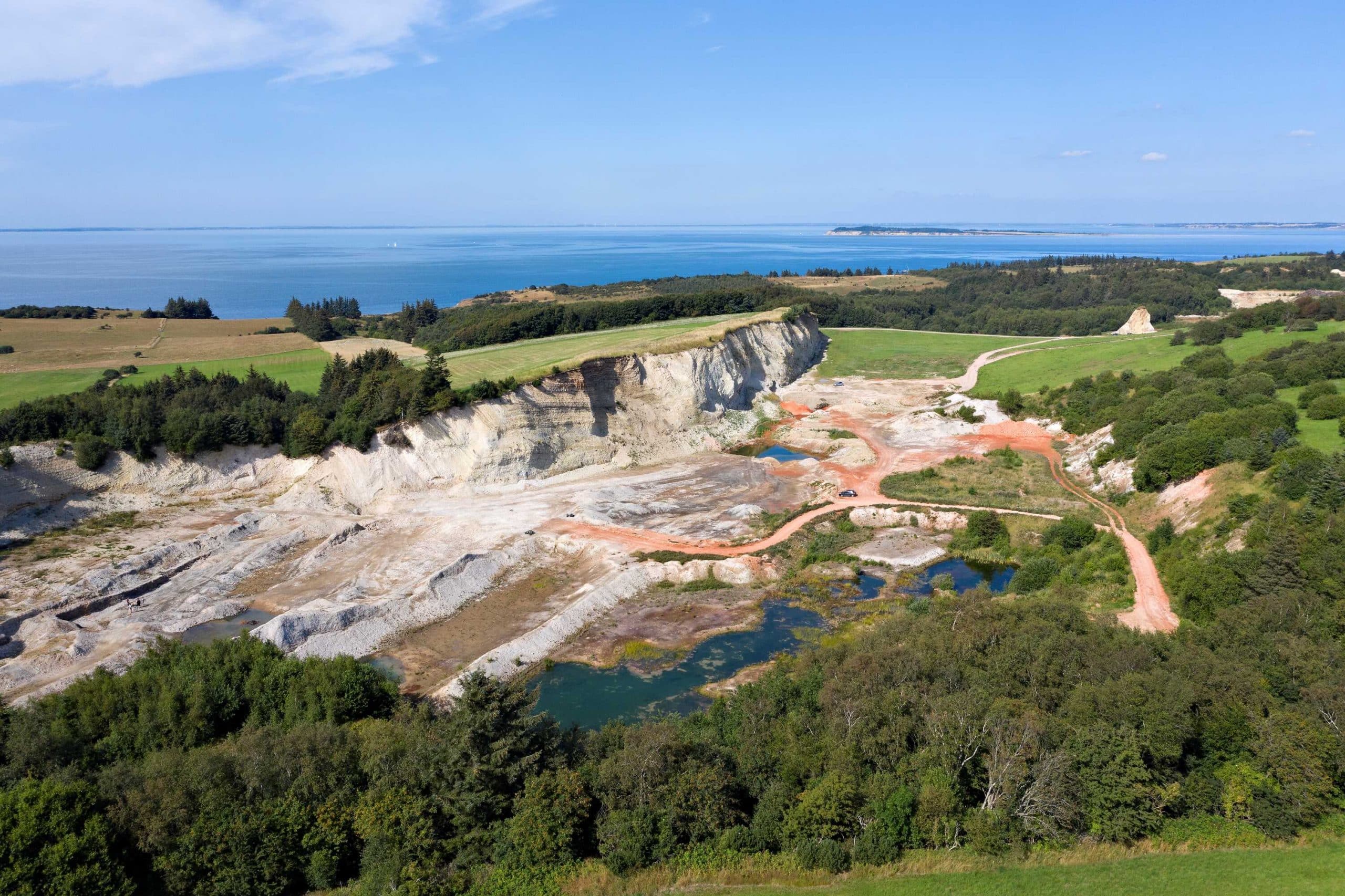
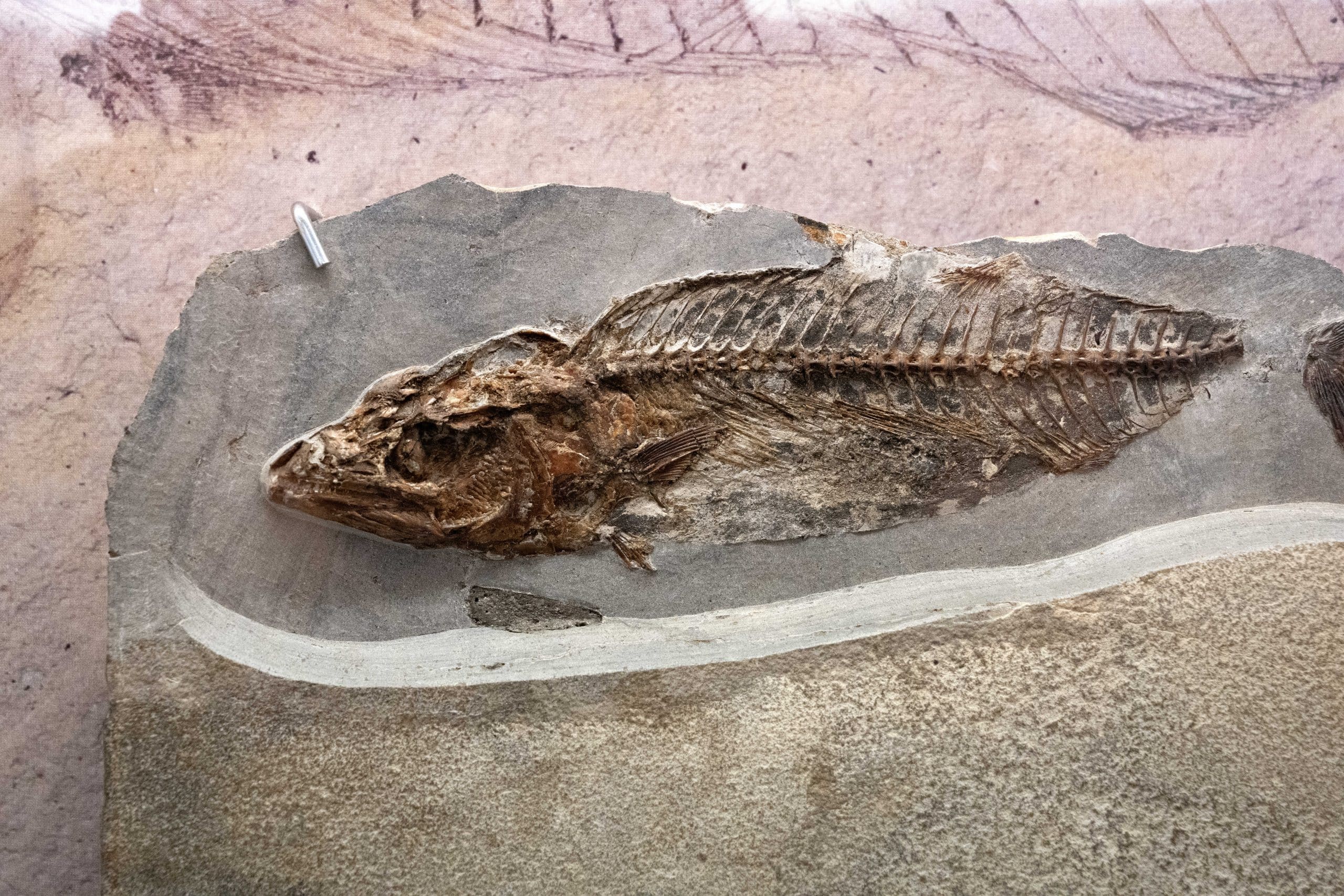
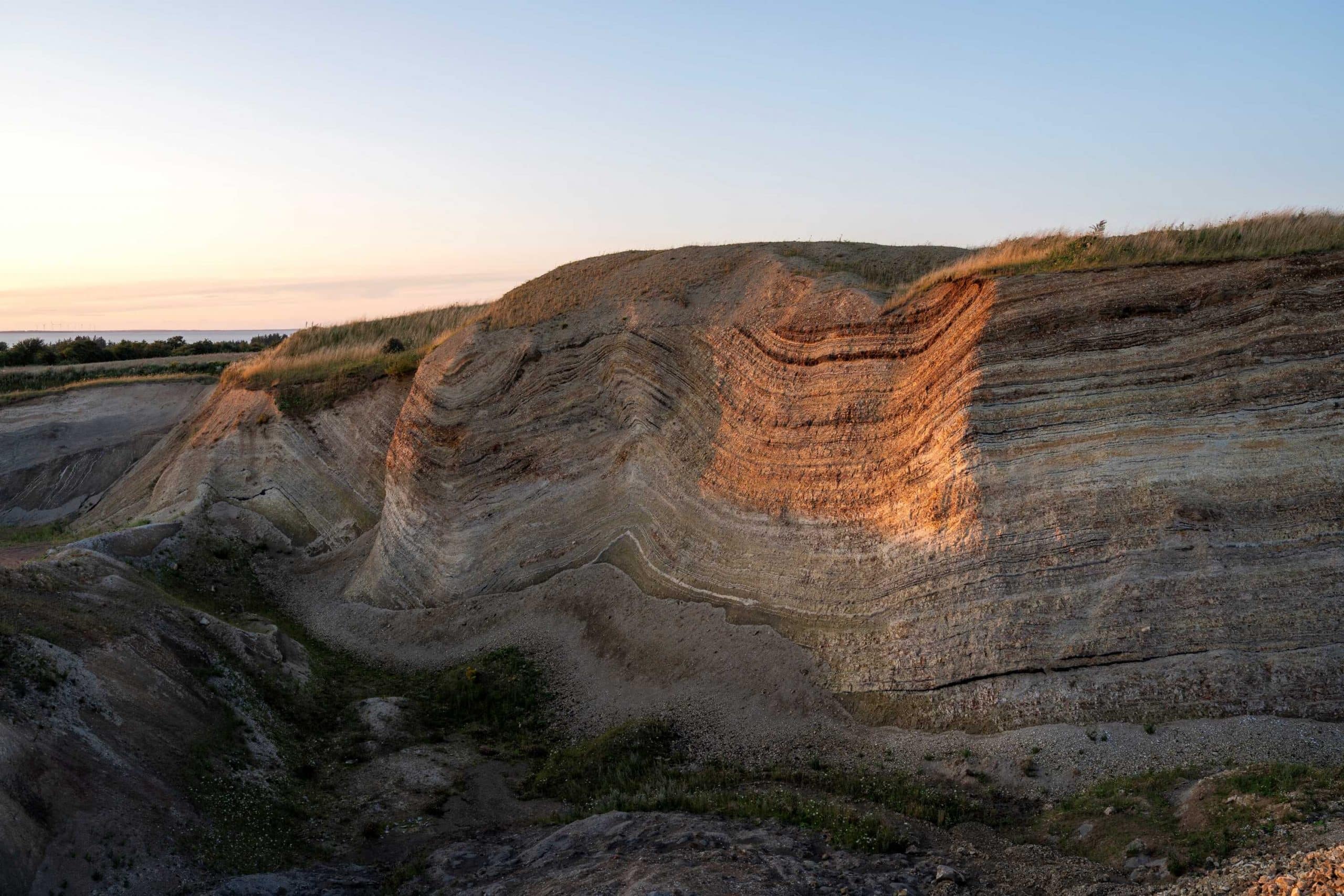
Many amateur collectors and professional paleontologists visit the pier sites to find unique fossils.
In the piers and Stolleklint Clay it is possible to find fossils from a variety of animal groups, as well as many plant remains. From the Stolleklint Clay and piers, we know of around 75 different species of fish, around 200 different species of insects, as well as a few species of mussels, snails, starfish, starfish, shrimp, birds, turtles, sea snakes, crabs and more, and a large number of different plants.
Imprints and fossils
Fossils are preserved partly as impressions in the soft moler, where the impressions can be colored by rust or calcium phosphate. The moler can also appear in a lime-hardened form called cement stone.
Complete cement stones are often shaped like large lenses, they can be more than 2 meters in diameter and over half a meter thick. The name comes from the fact that the stones were used as “limestone quarries”. Cement stones are formed in the seabed and are characterized by an exceptional degree of preservation of fossils such as three-dimensional bird skeletons, which is unique.
A special type of cement stone, called “striped cement stone”, is mainly found on Fur. These are gray and appear more wavy than the ordinary cement stone, and they represent an older part of the molar.
Other hardened layers include what is known as clay shale. These layers originate from the StolleKlint Clay in the lower part of the Ølst Formation. The clay shale is a hardened mudstone that testifies to massive global warming and the upper part of the molar testifies to a fauna more suited to a temperate climate. These layers lie on a globally recognized geological time boundary between the Paleocene/Eocene eras and prove a climate-influenced evolution.
The study of fossils and fauna at this level is of great international interest.