


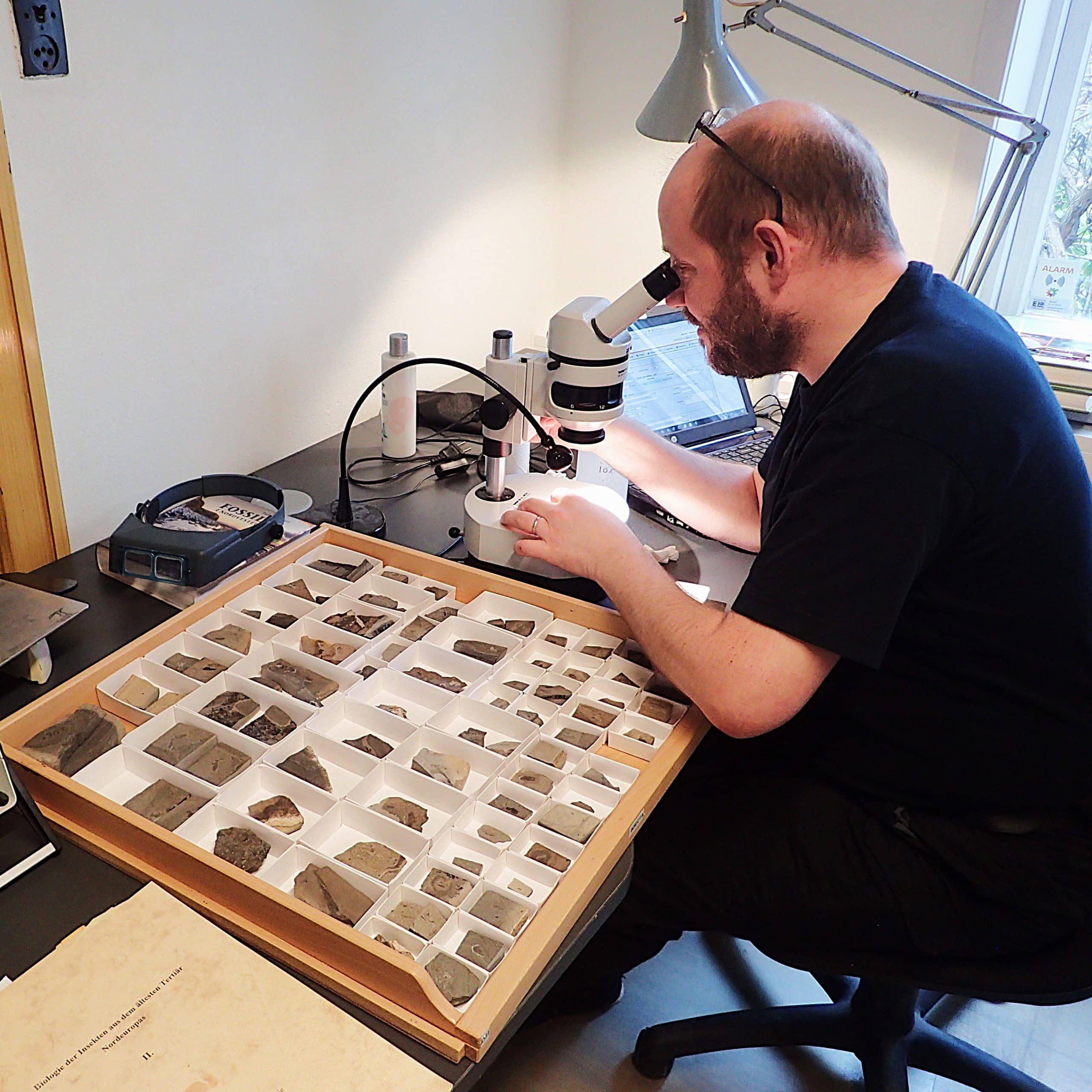
Four Danish researchers from the Natural History Museum Aarhus, Museum Mors and Museum Salling, with Thomas Simonsen as first author, have just described the world’s first and so far only known fossil specimen of the small earwig family Apachyidae.
Living species of this group are currently restricted to central and southern Africa, India, Southeast Asia and Australia. The earwig group is characterized by being relatively large, flat and often brightly colored.
One of the co-authors, museum curator and paleontologist Jan Audun Rasmussen, Museum Mors, explains that the extremely rare, fossilized earwig was found by Henrik Madsen from Museum Mors a few years ago in the approximately 55 million-year-old moler deposits on Limfjord Island Mors. He could immediately see that the eagle wren did not look like the others found in the molar, and that it must therefore be a completely new species that no one had seen before. The fact that it turned out to be the only known fossil in the world of the living eagle wagtail family is quite a sensation.
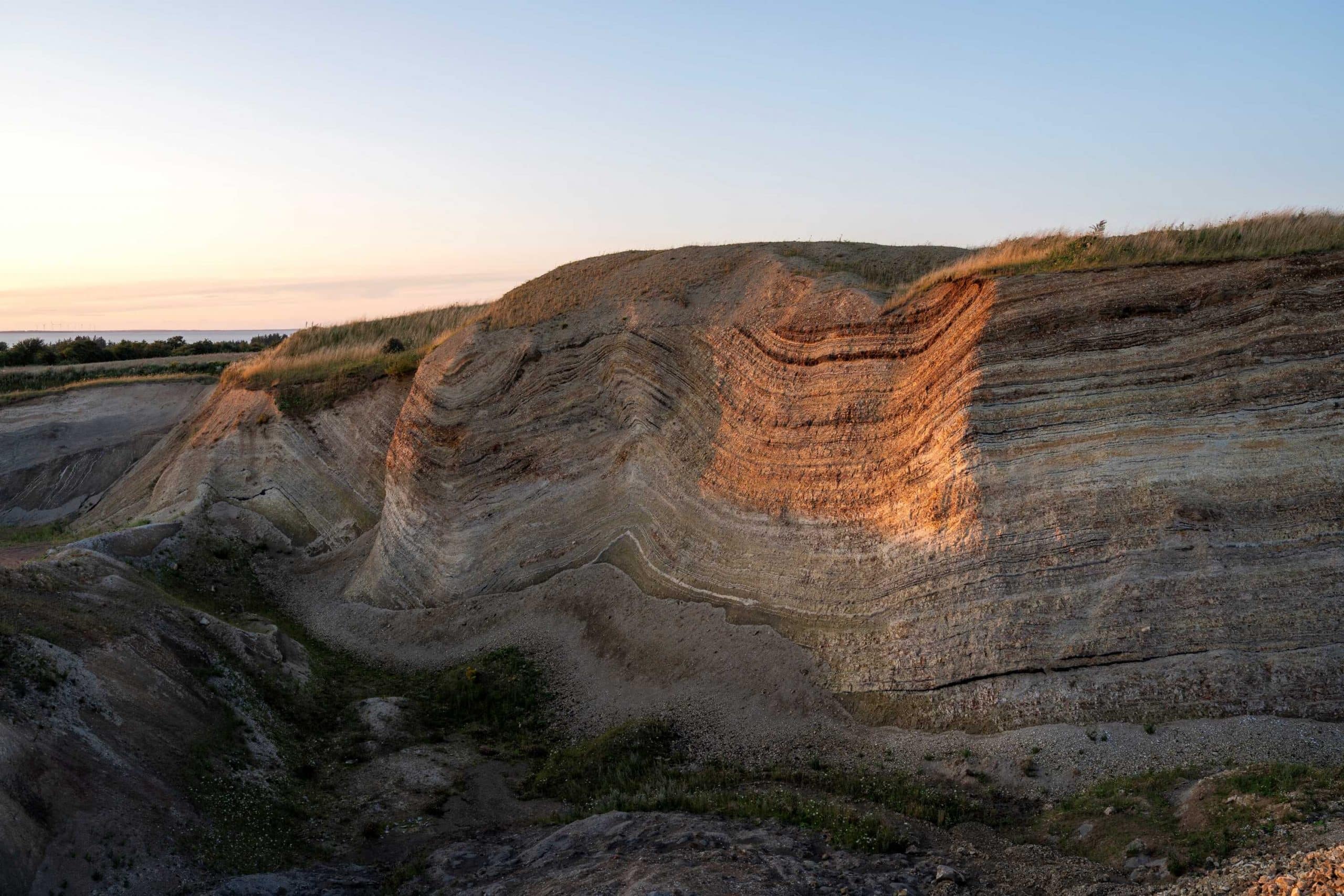
The mole in the western Limfjord area is an ancient seabed, formed at a time when the whole of Denmark was covered by a prehistoric sea. Since the living eagle wrasses of this family live under the bark of trees, researchers suspect that the eagle wrasses were transported into the sea sitting under the bark of a tree trunk that probably drifted from Sweden or Norway 55 million years ago.
The researchers do not find it surprising that an ancestor of species in the living, subtropical and tropical eagle ray family has been found as far away as Denmark: “55 million years ago, there were subtropical conditions in the sea above present-day Denmark, which is also reflected in the fossil fish, birds, insects and plants found in the ancient seabed deposits on Mors and Fur,” says Jan Audun Rasmussen, who together with his colleagues is looking forward to communicating the exciting story at the museums. He emphasizes that sample collection, preparation, research and communication are all necessary and inseparable elements when museums seek to solve and communicate mysteries from Earth’s distant past.
The nearly 2 cm long earwig with the new scientific name Apachyus madseni is described in the latest issue of the international scientific journal Palaeoentomology, and is named after the fossil’s finder. The scientific article can be freely downloaded here: https://doi.org/10.11646/palaeoentomology.7.5.7.
The study is supported by the Danish Ministry of Culture, 15. Juni Fonden and Augustinus Fonden.
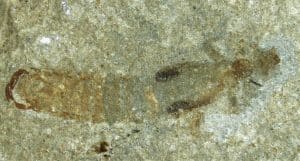
Caption 1. The earwig Apachyus madseni Simonsen & Rasmussen from the 55 million-year-old Fur Formation on Mors is almost 2 cm long. Note its distinct, curved pincers on the abdomen to the left of the picture. Photo: © Museum Mors.
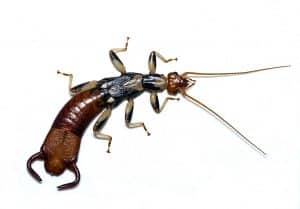
Caption 2. A living Australian relative of the fossil, the earwig Apachyus peterseni Borelli. Photo www.inaturalist.org/photo s/103595139, user tjeales; Cc-by-sa-4.0.